
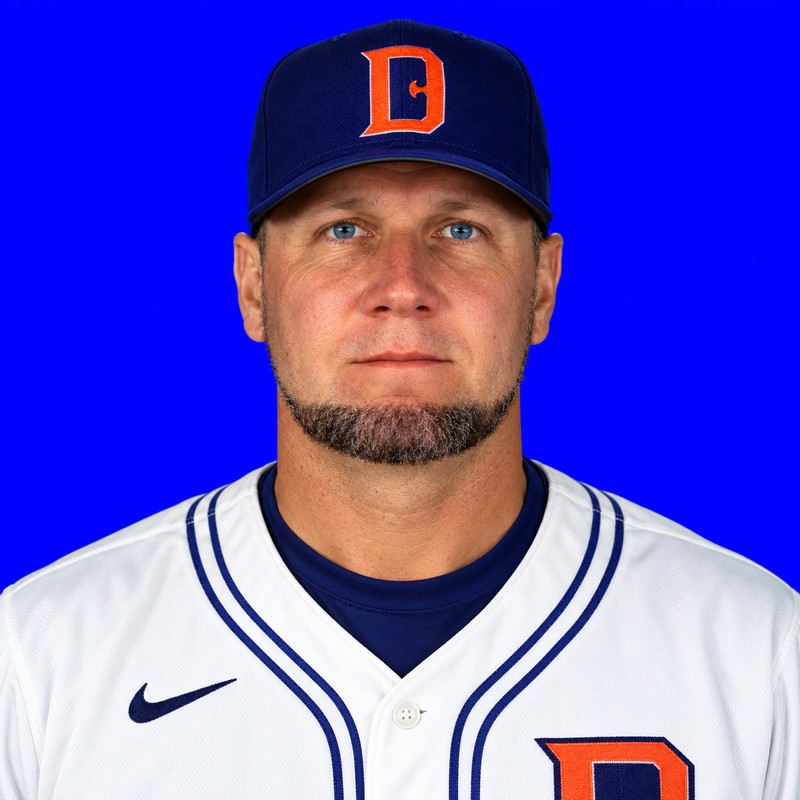
Start with the number that doesn't look real. From 2016 through 2073, the Detroit Rough Riders made the FAB postseason 58 years in a row. Not most years. Every year. For 55 straight seasons, 2019 to 2073, they finished first. Somewhere in there, a generation of Detroit fans grew up, grew old, and could not remember an October without their team in it.
The franchise sheet tells the story in a column of X's. It is the most monotonous page in the league, and it is the most remarkable. 20 championships. 31 seasons of 110 wins or more. 9 seasons of 120 or more. An all-time record of 6,509-3,181, which works out to a 0.672 winning percentage across 60 seasons — a franchise that, on average, has played like a 100-win team for its whole life.
This is the story of how that happened, who built it, and what it looks like now that the column of X's has a gap in it.
I. A .500 Beginning
It's worth remembering that it didn't start this way. In 2015, the Rough Riders' first season, Woodrow Davis managed them to 81-81 — dead even, third place, 5 games out. No playoffs. Davis managed one season and was gone.
Then everything changed at once. Under Arlen Myers in 2016 the club went 114-48 and won the division. In 2017 they went 106-56 and won the franchise's first title. Myers, in three seasons, went 318-169.
The engine of that early team was a shortstop named Paul McCoy and a catcher named Albert Grant. McCoy played in Detroit from 2016-2030 and finished with 2383 hits, 437 home runs, a .318/.407/.566 slash line and 116.1 WAR — the highest total of any Rough Rider. He won the AC MVP in 2022, 2025 and 2028. Grant, the catcher, hit .318/.387/.529 with 324 homers over 2015-2027 and won the 2021 MVP. His No. 3 was retired in 2027, the first number the franchise ever hung.

For 55 straight seasons, they finished first.
They had help. Raúl Dávila, a third baseman, played 2020-2032; 2039 and hit .302/.359/.529 with 337 home runs, winning the 2024 MVP. Sang-yeon Choi, in center from 2026-2036, hit .335/.369/.438 and stole 543 bases. Neither is in the Hall of Fame, according to the greats list, but both numbers hang in Detroit: Dávila's No. 50 since 2040, Choi's No. 58 since 2039.
Around them, the titles came in a steady drip — 2022, 2024, 2026, 2030 — under a rotating cast of managers: Brad Smith, Bill Smith, Craig Towns. The standard was set early, and every one of them met it. No Detroit manager after Davis finished a tenure with a losing record.
II. The Middle Empire
By the late 2030s the cast had turned over completely, and the results somehow got better. In 2037 Detroit won 113 games. In 2038, 116. In 2040, under new manager Joe Schank, 120.
The bats belonged to a new core. Dana Crocker, a third baseman, played 2035-2051: 2471 hits, 452 homers, a .299/.409/.530 line, the 2037 MVP. Ramiro Castillo, in left, hit 625 home runs — more than anyone on the all-time greats list — and won back-to-back MVPs in 2040 and 2041. On the mound, Brandon Cardona went 189-63 with a 3.05 ERA and four AC MOP awards.
And then came Romelo Suárez, a second baseman who won Rookie of the Year in 2040 and five MVP awards after it, collecting 2196 hits and 102.8 WAR — second only to McCoy in franchise history.
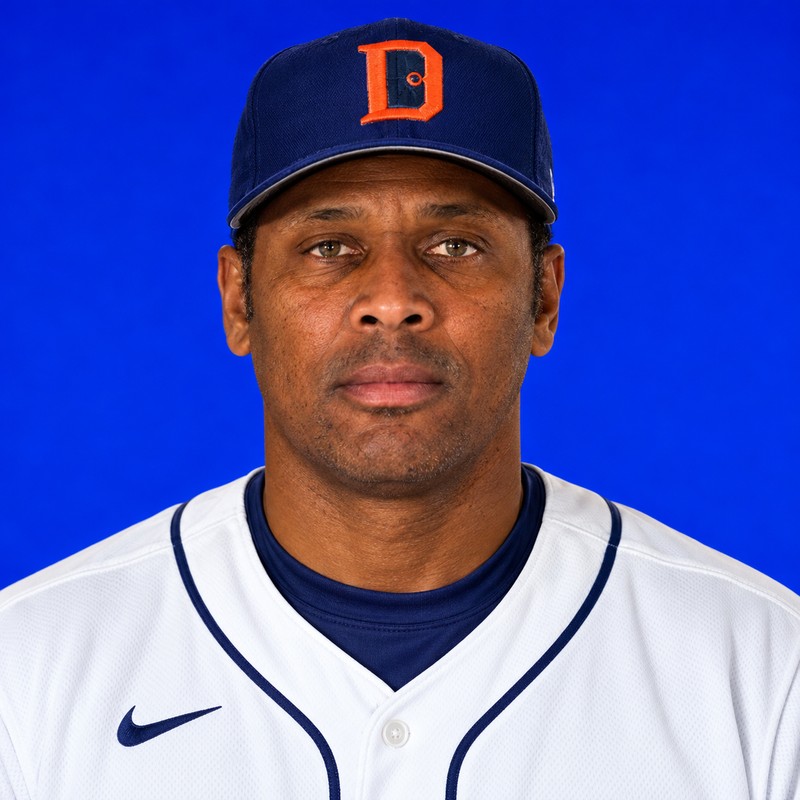
Schank managed sixteen seasons, 2040–2055, and went 1,819-773. He won 4 titles (2045, 2046, 2049, 2055). Here is the strange part: his teams won 120 games in 2040 and 2052 and didn't win the title either year. In Detroit, a 120-win season and a title were never the same thing. The regular season was the floor; October was the coin flip.
In Detroit, the regular season was the floor. October was the coin flip.
III. Crocker's Dugout
When Schank's run ended after 2055, the manager's chair went to a familiar name. The franchise's manager list shows Dana Crocker in the dugout from 2056 to 2070 — the same name as the 2037 MVP whose No. 16 was retired in 2055.
What followed is the high-water mark of the franchise. Crocker's teams went 1,734-696 — a 0.714 winning percentage over fifteen seasons — and won 9 championships: 2056, 2060, 2061, 2063, 2065, 2066, 2067, 2069, 2070. The 2057 team went 127-35, the best record in franchise history. The 2056 club went 124-38 and won it all. From 2065 to 2067, they won three straight titles.
That era had its own stars. Noah Aitcheson pitched 2048-2063 and went 279-79 with a 3.16 ERA and 3494 strikeouts, with AC MOP awards in 2053, 2056 and 2057. Cisco Lucero, a center fielder and the 2049 Rookie of the Year, put up 306 homers and 232 steals and 61.2 WAR in nine seasons.

Lucero's No. 20 was retired in 2066. Five years later, in 2071, the club retired No. 20 again — for Juan Aparico. It is the only number on the Detroit list that hangs twice.
It is the only number on the Detroit list that hangs twice.
IV. The Gap in the Column
Aubrey Wiggins took over in 2071 and won the title in his first year, at 87-66 — the lowest win total of any Detroit champion. Then 106 wins in 2072 and 113 in 2073, both first-place finishes.
And then the sheet, for the first time in 55 years, says something else. In the franchise sheet's last snapshot, taken 09/01/2074 (in-game), the 2074 Rough Riders stood 82-57, in 2nd place, 2 games back, with no playoff mark beside the season. Still a winning team, by plenty. But not first.
This season, as of June 3, 2075, they are 33-27, ranked No. 12 in the league's power rankings after sitting 10th the week before. Their run differential points to a 35-25 team. The pitching staff's ERA is 4.69, and the lineup is hitting .291.
On June 5 the front office spent the fourth overall pick on Tommy Powell, a starting pitcher out of Loyola Marymount, rated five stars for potential on the FAB draft board. Whether he's the first piece of the next empire or just a good young arm is a question the sheet can't answer yet.
Every dynasty eventually reads like a list. Detroit's is just longer than anyone else's.
Coda
The retired numbers in Detroit — 17 of them — read like a timeline: Grant, McCoy, Choi, Dávila, Castillo, Ruíz, Crocker, Cardona, Suárez, Lucero, Burns, Aitcheson, Burfield, Bueno, Aparico, Thomas, Bloom. Each one is a season or a decade of X's in the playoff column.
The streak is over. The franchise isn't. For 60 seasons, the Rough Riders have been the measuring stick every other FAB club has had to hold itself against — and in a league built on numbers, theirs are the ones that don't look real.
Sources: Rough Riders franchise sheet (season-by-season records, managers and retired numbers, snapshot 09/01/2074 (in-game)); OOTP batting and pitching registers via the Detroit All-Time Greats list; OOTP Team Power Rankings (June 3, 2075); FAB 2075 draft data. Award years are as listed on the greats list. The 2074 line is a mid-season snapshot, not a final record.